
5 min read
How to Create a Snack Station for Kids in a Pantry
In the blink of an eye, summer has come and gone, another school year has kicked off, and the messy pantry you promised yourself you would organize...
5 min read
Updated June 2026
The Short Answer: The most effective ways to maximize a small walk-in pantry are: using floor-to-ceiling shelving to capture vertical space, organizing items into dedicated zones by frequency of use, adding pull-out drawers to eliminate dead space in deep shelves, and improving lighting so every corner is visible and usable. For the highest-impact result, a custom-built pantry system designed around your specific space outperforms any off-the-shelf solution.
A small walk-in pantry comes with real challenges: wasted vertical space, hard-to-reach shelves, and pantry items that disappear into the back never to be found. But with the right layout and storage features, even a compact pantry can become one of the most functional rooms in your kitchen.
In this article, we'll cover the practical, proven strategies for maximizing storage in a small walk-in pantry, including shelf height, storage zones, pull-out features, and material choices, so you can get more out of every inch of your kitchen.
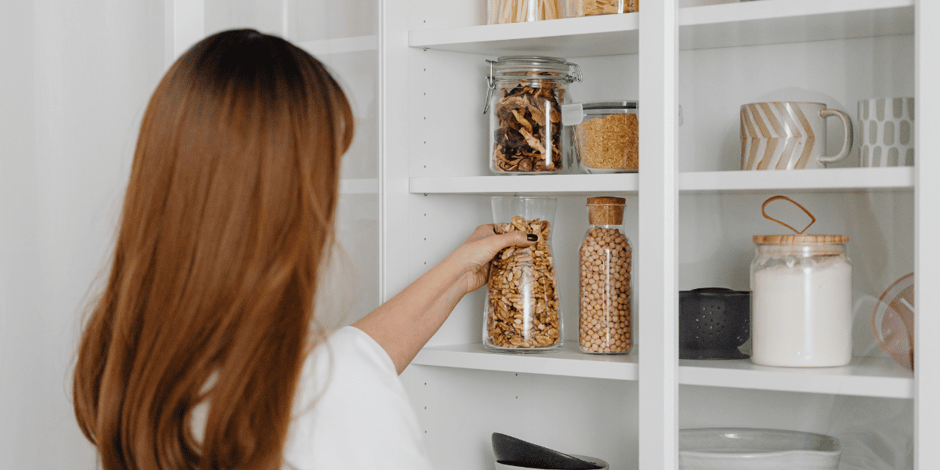
Most pantries leave the top third of the wall completely unused. Floor-to-ceiling shelving can dramatically increase storage capacity without changing the room's footprint.
Recommended shelf spacing by zone:
Adjustable shelving is worth the investment. Your storage needs will shift over time, and a fixed layout locks you in.
A pantry that's hard to navigate gets abandoned. Two measurements make the biggest practical difference:
Lighting matters just as much as dimensions. Under-shelf lighting and well-placed overhead fixtures eliminate dark corners, which is where organization systems go to die.
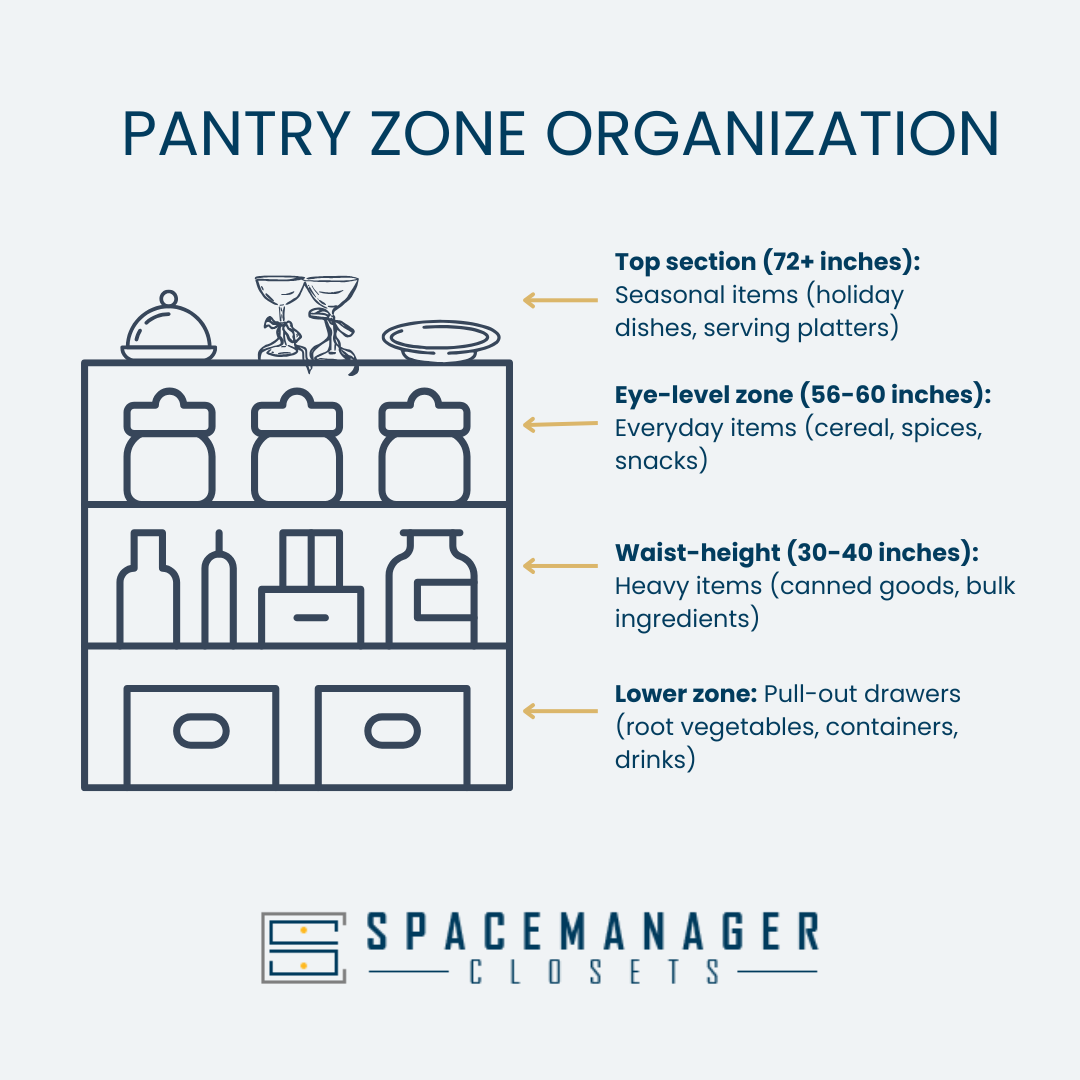
Dividing your pantry into zones by frequency of use not only helps organize the space, but also keeps everyday cooking fast and intuitive. Here are a few storage zone ideas to get you started:
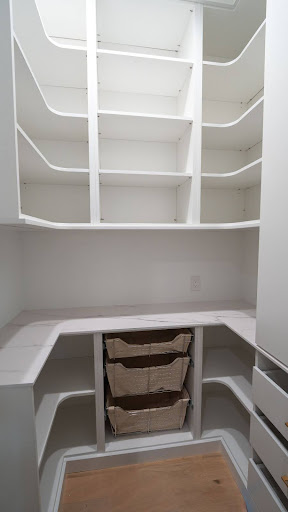
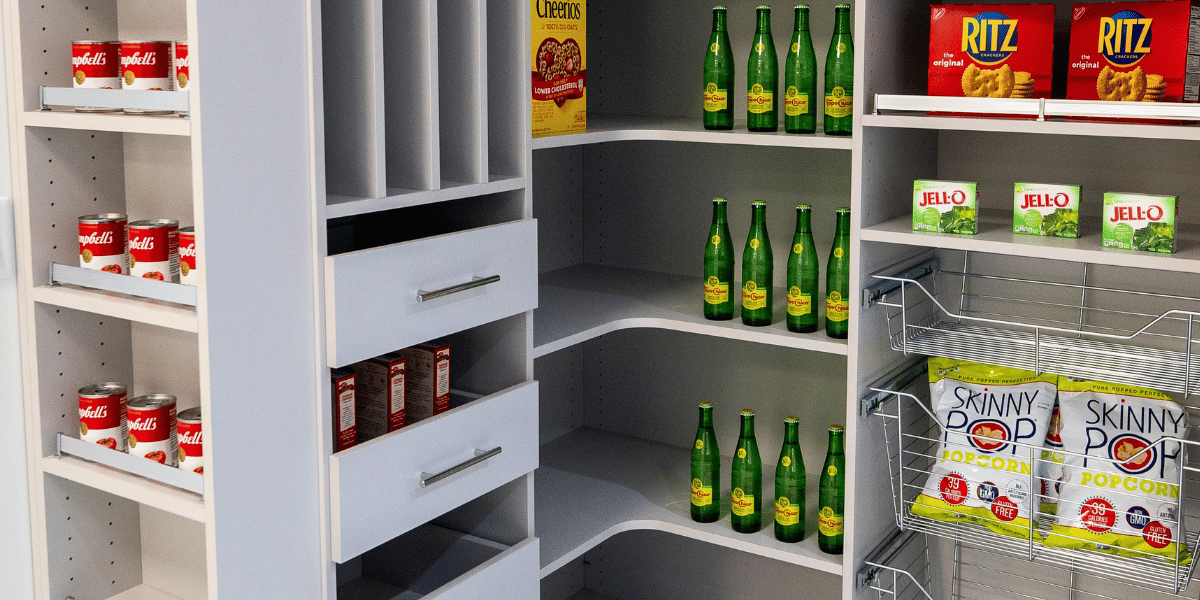
Pull-out drawers are one of the highest-impact upgrades in a small pantry. They prevent items from getting buried in deep shelves and make everything visible at a glance.
Corner storage is the other common dead zone. A well-designed corner solution, whether angled shelving or a pull-out carousel, can recover several square feet of usable storage.
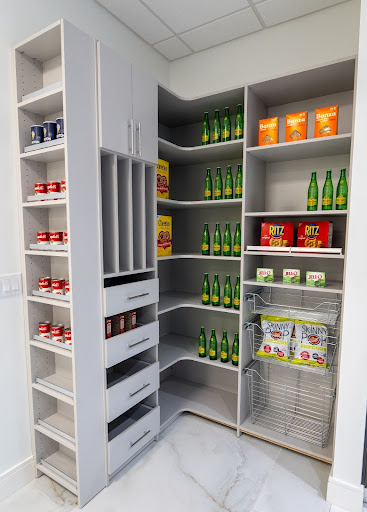
Clear, uniform containers do two things: they make the pantry look cohesive, and they make it easier to see when you're running low.
Practical container choices:
Shelf risers, dividers, and consistent labeling extend the life of any organizational system. The pantry stays functional longterm when everyone in the household knows where things belong.
Good pantry lighting isn't optional; it's functional. Recessed ceiling lights provide overall illumination, while under-shelf lighting brightens specific sections so nothing hides in shadow.
Motion-sensor lighting is a practical upgrade if your hands are regularly full when you open the pantry door.
Melamine and laminate shelving are the most popular choices for pantry systems because they're easy to wipe clean and withstand everyday use. For flooring, non-slip surfaces improve both safety and durability, especially in spaces where spills happen.
A small pantry should be practical first, but it can look intentional, too. Matching containers, a consistent color palette, and a few natural textures like woven baskets make the space feel designed rather than just functional. A visually calm pantry is also easier to maintain.
This is one of the most common questions we hear, and it deserves a direct answer.
DIY pantry organization (containers, risers, off-the-shelf organizers): approximately $200–$500
Professional custom pantry installation (fully designed and built-in system): typically $2,500–$7,000 depending on square footage, materials, and features
The range is wide because every pantry is different, including dimensions, ceiling height, corner configuration, finish choices, and the number of pull-out features, all of which affect the final number. The most accurate way to understand your cost is through a free in-home consultation, where a designer can assess your specific space and provide a real estimate.
SpaceManager has been designing and installing custom pantries in Houston for more than 25 years. All components are manufactured locally, and every project includes a 3D rendering before installation begins so you can see exactly what you're getting.

A small pantry doesn't have to feel cramped or frustrating. With the right design, it becomes a space that actively supports how you cook, shop, and live.
The most impactful changes:
If you're ready to transform your pantry, schedule a free in-home design consultation with SpaceManager. Our designers come to your home, design around your specific space, and build a system that works the way your kitchen does.
The most effective approach combines vertical shelving (floor to ceiling), a zone-based organization system, pull-out drawers to access deep shelves, and improved lighting. For a compact pantry, a custom-built system designed around your exact dimensions will always outperform generic shelving units.
Most pantry shelves work best at 12–16 inches deep. Shallower shelves (10–12 inches) work well for spices and canned goods — items stay visible and nothing gets lost in the back. Deeper shelves (16–18 inches) suit bulk items and larger containers but require pull-out drawers or risers to maintain accessibility.
A walk-in pantry as small as 5×5 feet can be highly functional with the right design. The key is a 36-inch center aisle for comfortable movement and shelving on all available walls. Smaller spaces benefit most from custom solutions because every inch has to work.
DIY organization using containers, risers, and organizers typically runs $200–$500. A professionally installed custom pantry system in Houston typically ranges from $2,500 to $7,000, depending on square footage, materials, and features. A free in-home consultation is the most reliable way to get an accurate number for your specific pantry.
Most custom pantry installations take one to two days once materials are ready. The timeline depends on the complexity of the design and whether any electrical work (for lighting) is involved. SpaceManager's process includes an in-home design appointment, 3D renderings for approval, local manufacturing, and professional installation.
A combination of recessed ceiling lights for overall illumination and under-shelf LED lighting for targeted brightness works best. Under-shelf lights eliminate shadows in the most-used zones and make it easier to read labels. Motion-sensor lighting is a convenient upgrade for hands-free activation.
Yes — many homeowners convert an adjacent closet, awkward nook, or underused corner into a walk-in pantry. SpaceManager designers assess your existing space during a free in-home consultation and can help you evaluate whether a conversion or a redesign of an existing pantry makes more sense for your home.
SpaceManager designs and installs custom pantries throughout the Houston metro area, including Katy, The Woodlands, Sugar Land, Cypress, Pearland, and surrounding communities.
View all service areas → SpaceManager Closets Service Areas
Ready to see what's possible in your pantry? Schedule a free in-home design consultation — SpaceManager designers come to your home, measure your space, and design a custom solution you can see in 3D before anything is built.
5 min read
In the blink of an eye, summer has come and gone, another school year has kicked off, and the messy pantry you promised yourself you would organize...
5 min read
Quick answer: the key to organizing a small pantry with a custom storage system is to use vertical space and create dedicated zones for specific...
.png)
5 min read
If you're upgrading your kitchen storage and are stuck wondering whether to add pull-out pantry shelves or stick with traditional fixed shelves,...