
5 min read
Not Enough Closet Space in Your New Houston Home? Here’s the Fix
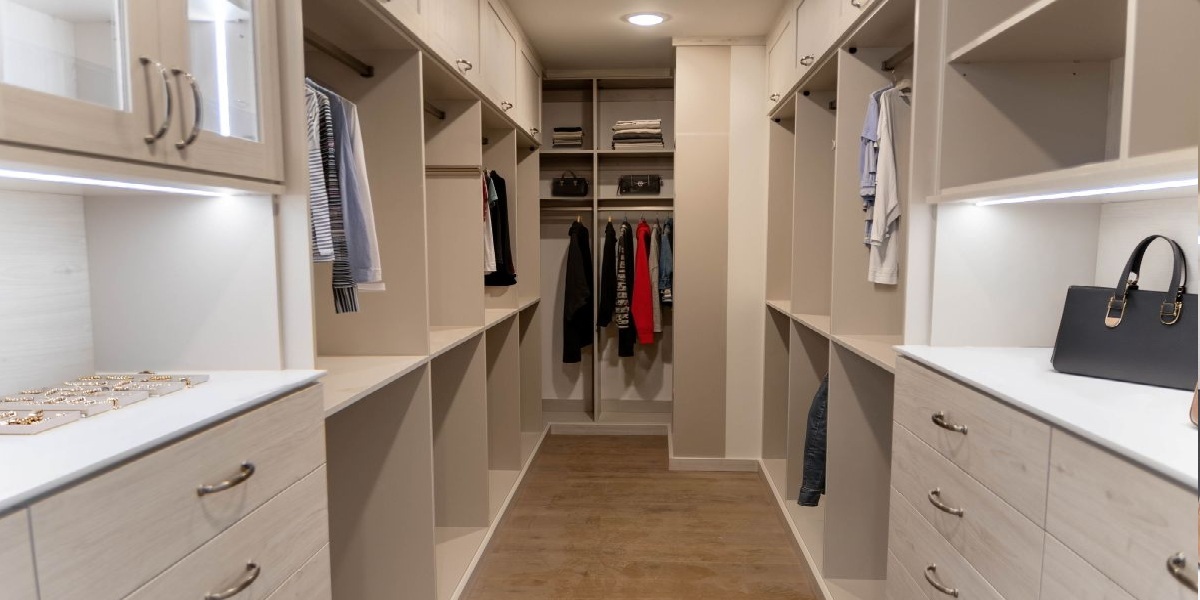
Why do closets in newly built Houston homes feel small, even when they look big? Why do closets in newly built Houston homes fill up so fast? If...
7 min read
If you have been looking at garage storage options, you have probably noticed that most guides give you a vague "it depends" and leave you to figure out the rest. This one will not do that.
For nearly three decades, we’ve helped Houstonians solve their garage storage and organization issues. After 25 years of hands-on experience, we know that wall-mounted garage storage and floor cabinets each have a real place in a well-designed garage. The question is which one belongs in yours, and why.
In this article, we’ll break down how each system performs across the things that matter most: available space, storage capacity, installation, durability, and cost. By the end, you will know exactly which direction makes sense for your situation.
If you are in the Houston area and want to talk through your garage in person, our team offers free in-home design consultations. But first, here is what you need to know.
.png?width=1200&height=680&name=The%20Best%20Garage%20Layouts%20in%20Houston%20for%20Tools%2c%20Lawn%20and%20Sports%20Gear%20(4).png)
Wall-mounted garage storage systems are secured directly to your wall studs. They sit off the ground, which keeps your floor clear for vehicles, workspace, or recreational equipment. Common wall-mounted options include slatwall panels, wall-hung cabinets, and modular shelving systems that anchor to the wall at various heights.
Floor cabinets, on the other hand, rest on the floor and function more like those in a kitchen or laundry room. They often sit deeper, hold more weight per unit, and can accommodate bulk storage in ways that wall systems sometimes cannot.
Most fully custom garages use a combination of both. But if you are working with a limited budget or a smaller garage footprint, understanding the strengths and trade-offs of each system helps you prioritize where to start.

There is no universal winner here, but wall-mounted storage offers meaningful advantages that make it the right first choice for many homeowners.
The biggest benefit is floor space. When your storage lives on the wall, you reclaim the square footage underneath. That matters especially if you want to park two cars, set up a workshop, or simply move through the garage without stepping around cabinets. In Houston homes where garages double as hobby spaces, gyms, or extra storage for lawn and pool equipment, that cleared floor area can completely change how usable the space feels.
Wall-mounted systems also tend to be more flexible. Slatwall panels, in particular, allow you to reconfigure hooks, bins, and shelves as your needs change without reinstalling anything. If your storage needs shift from season to season (and in Houston, between hurricane prep, holiday decor, and summer gear, they often do), that adaptability is worth a lot.
Where floor cabinets pull ahead is in raw capacity and weight support. A deep floor cabinet can hold significantly heavier items, like power tools, bulk chemicals, or large equipment, than most wall-hung units are designed to carry. If you are storing a lot of heavy things, floor cabinets earn their place.
The short answer: wall-mounted storage is usually the smarter starting point for maximizing space, and floor cabinets are the right add-on when you need serious load-bearing capacity.
.png?width=1200&height=680&name=slatwall%20garage%20organization%20(2).png)
There’s a lot to consider when choosing between wall-mounted or floor-based cabinetry for your garage. Here are some factors to keep in mind:
Pros:
Cons:
Pros:
Houston homeowners deal with conditions that not everyone in the country has to think about: high humidity year-round, hard freeze risk in winter, occasional flooding, and garage spaces that often serve triple or quadruple duty as storage, workshops, gyms, and vehicle parking.
First, keeping items off the floor matters more here than in drier climates. Wall-mounted systems reduce your exposure to moisture damage, especially for items stored in the back corners of your garage, where condensation tends to settle.
Second, ventilation and airflow matter in a custom garage design. Floor cabinets pushed flush against every wall can restrict airflow and create conditions where mold and mildew develop. A design that mixes wall-mounted systems with strategically placed floor cabinets tends to breathe better.
Third, Houston homeowners typically need to store a wide variety of items in the garage. Hurricane supplies, lawn equipment for large lots, sports gear, tools, and seasonal decor all compete for the same space. A fully custom design that accounts for all of it, rather than a one-size-fits-all cabinet package, tends to hold up best over time.
SpaceManager Closets has been designing custom garage systems for Houston homeowners for more than 25 years. Our design consultants understand local conditions and can help you build a garage that functions well all year, not just on move-in day.
Cost is often the first question, and it deserves a direct answer.
Wall-mounted systems vary quite a bit depending on materials, coverage, and the complexity of the design. Basic slatwall panels with hooks and bins are at the lower end of the range. Fully custom wall-hung cabinetry, powder-coated steel systems, or multi-zone designs covering an entire two- or three-car garage are at the higher end.
Floor cabinets follow a similar pattern. Pre-made, big-box store floor cabinets cost less upfront but often show their limitations quickly: doors that warp, finishes that chip, and sizing that does not match your specific wall or ceiling dimensions. Custom floor cabinets fit the space as designed, use better materials, and tend to last significantly longer.
In both categories, the real question is not which type costs less upfront. It is the system that delivers the best value over time for your specific garage. A custom wall-mounted system sized for your ceiling height, stud placement, and storage goals will outperform a generic floor cabinet kit at almost any price comparison when you look at it over five to ten years.
For accurate pricing on your garage, the best step is a free in-home design consultation. That is the only way to quote a design that actually fits your space.
.png?width=1200&height=680&name=slatwall%20garage%20organization%20(1).png)
Yes, and in most cases, you should.
The garages that function best are rarely all one thing. A well-designed garage typically uses wall-mounted storage for frequently accessed items, tools, and sporting equipment, and floor cabinets for the heavy, bulk items that need a solid surface underneath them. Overhead storage racks can also enter the mix for seasonal gear and items that do not need to be accessed often.
The key is designing the layout so that each zone serves a clear purpose and the systems work together rather than compete for space. That is where working with a designer makes a noticeable difference. Rather than buying cabinets and figuring out placement later, you start with your priorities, parking two cars, housing a workshop, storing lawn equipment, and design a system that solves for all of them.
Our design consultants take that approach on every project. We start with how you actually use your garage and build from there.
Wall-mounted garage storage and floor cabinets are not competing options so much as complementary tools. Wall-mounted systems earn their place by freeing up floor area, staying flexible, and keeping items elevated off Houston's humidity-prone floors. Floor cabinets earn their place when you need serious weight-bearing capacity and bulk storage.
For most Houston homeowners, the right answer is a custom design that uses both, sized and positioned for the way you actually use your space.
If you are ready to stop guessing and see what your garage could actually look like, schedule your free in-home design consultation today.
Neither is universally better. Each solves a different problem. Wall-mounted storage is the smarter starting point for most homeowners because it keeps your floor clear for vehicles and workspace. Floor cabinets earn their place when you need to store heavy equipment, bulk supplies, or large tools that wall systems aren't built to support. The best garages typically use both.
Weight capacity depends on the specific system and how it's installed. Most wall-hung cabinets and slatwall systems are designed for moderate loads: tools, sporting gear, bins, and similar items. For very heavy equipment like power tools, automotive supplies, or bulk chemicals, floor cabinets are a better fit. Proper anchoring into wall studs is essential; an improperly installed wall system is a safety risk regardless of its rated capacity.
Houston's high humidity, occasional flooding risk, and year-round heat make wall-mounted storage particularly valuable. Keeping items elevated off the floor reduces exposure to moisture damage and condensation, which tends to collect in corners and along baseboards. Floor cabinets with tight footprints can also trap moisture underneath them, so airflow should be a factor in any garage design.
Yes, and for most garages, that's the right approach. Wall-mounted systems work well for frequently accessed items, tools, and sporting equipment. Floor cabinets handle the heavy, bulk storage that needs a solid surface. Adding overhead racks for seasonal items rounds out the design. The key is planning the layout intentionally so each system has a clear role.
Durability depends more on material quality and installation than on the type of system. Big-box store cabinets, whether wall-mounted or floor-based, often show wear within a few years: warped doors, chipping finishes, and sagging shelves. Custom systems built with quality materials and properly installed can last 15 to 20 years or more. For either type, professional installation is the biggest factor in long-term performance.
For basic slatwall panels and lightweight shelving, experienced DIYers can often handle installation. For wall-hung cabinets, heavier modular systems, or garages with concrete, brick, or block walls, professional installation is strongly recommended. Improper anchoring is the most common reason garage storage fails, and in wall-mounted systems, a failure can be a safety hazard.
A two-car garage benefits most from a design that maximizes wall and ceiling space rather than consuming floor area. A combination of wall-mounted cabinets, slatwall panels for tools and gear, and overhead racks for seasonal items typically works well. The specific layout depends on whether you're parking two vehicles, running a workshop, or using the space for other purposes, which is why a custom design consultation is the most reliable way to get it right.
5 min read
Why do closets in newly built Houston homes feel small, even when they look big? Why do closets in newly built Houston homes fill up so fast? If...

7 min read
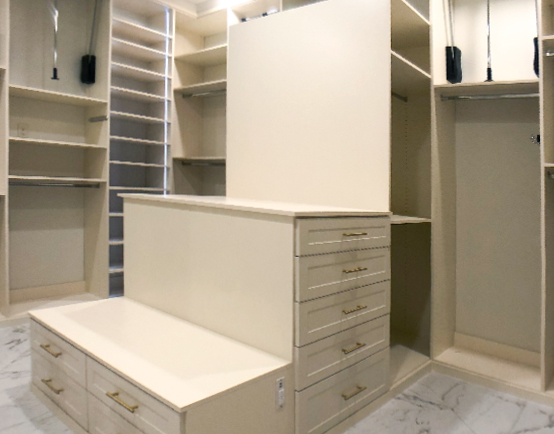
We’ve all seen the videos: A homeowner transforms a plain living room wall into a gorgeous floor-to-ceiling built-in over a weekend, armed with an...
1 min read
Shelving plays an important role in keeping your home organized, but not all shelves are created equal. The depth of a shelf can greatly affect how...