
6 min read
How to Design a Garage for Both Storage and a Workshop
Most garages are asked to do too many things at once: park the car, hold the holiday decorations, store the lawn equipment, and somehow also function...
5 min read
Quick Answer: The best way to maximize garage storage when you have limited wall space is to build upward instead of outward, design around your utilities rather than avoiding them, and reclaim the four zones most people overlook: the ceiling above your parked car, the wall above the garage door, the slim gaps between obstructions, and the backs and swings of your doors.
Despite Houston being synonymous with driving and oversized vehicles, most garages are seriously lacking in functional storage, and even more so if you're limited on wall space.
Trying to figure out the best storage layout for your garage with limited wall space can be tricky. But have no fear, after more than 25 years of designing custom storage solutions, we've seen it all and know how to address storage quirks commonly found in Houston homes.
If your garage is narrow, tandem, or chopped up by a water heater, breaker panel, side door, and pull-down attic ladder, you still have plenty of storage options. You need a layout that treats vertical space and odd corners as primary real estate instead of leftovers.
In this article, we'll discuss how to maximize your garage storage with limited wall space, including key issues found in many Houston garages, and a step-by-step guide to solving them, so you can confidently reclaim your garage's valuable storage space.
Many homeowners never consider wall space when thinking about garage storage. That's because most garages appear roomy at first, but are surprisingly deceptive when it comes time to store belongings and park a car inside.
When the water heater, breaker box, AC closet, side entry door, and attic ladder are factored in, there's suddenly barely any wall space left to build any cabinetry, shelving, or workshop against.
The good news is that limited wall space doesn't always mean limited storage. A standard two-car garage with 9-foot ceilings holds roughly 3,600 cubic feet of air, but most homeowners only use the bottom 4 feet. The room's there, you only need to look around.

Before you pick a single cabinet or hook, make one mental shift: Your usable storage is not the length of your walls. Your usable storage is the volume of empty space in the garage, including seemingly too-small corners and overhead space.
That means a 4-foot gap between your water heater and a side door is not "too small to bother with." If it has 9 feet of clear height above it, that sliver of floor represents 36 vertical square feet of potential storage. This one change in thinking opens up almost every solution below.
.png?width=1200&height=680&name=How%20to%20Maximize%20Garage%20Storage%20with%20Limited%20Wall%20Space%20(2).png)
The single largest area of unused storage space in most garages is directly above where the cars park. Even with an SUV in the bay, you usually have 3 to 4 feet of clear room between the roof of the vehicle and the ceiling.
A well-installed overhead rack turns that dead zone into prime storage for seasonal totes, luggage, coolers, camping gear, rarely-used sports equipment, and more. Mount overhead racks into the ceiling joists rather than drywall, and keep them clear of garage door tracks and opener arms.
Walk in and turn around. The patch of wall above your closed garage door, between the header and the ceiling, is almost always empty. In most homes, this area offers 18 to 30 inches of height across the full width of the opening.
That is a perfect spot for a long, shallow shelf or a row of bins holding things you rarely reach for: storm panels, plywood, insulation rolls, or off-season yard tools. Just confirm the storage clears the door when it is fully open, especially if you have a high-lift track.
.png?width=1200&height=680&name=How%20to%20Maximize%20Garage%20Storage%20with%20Limited%20Wall%20Space%20(1).png)
This is the shift that surprises people most. A water heater, breaker panel, or AC return is not a dead spot; it's a design constraint that a custom layout can work with.
Instead of surrendering the whole wall, a thoughtful design builds tall, narrow cabinets up to the obstruction, according to the clearance code, and continues the storage line above or beside it. A few approaches we use often:
The goal is a finished look that respects the bones of the house and gives you back every usable inch the builder left on the table.
The back of your interior entry door, the wall behind its open swing, and the strip between a side door and the corner are all storage zones in disguise.
A magnetic strip on the back of a door holds metal tools or bike helmets. A pegboard panel in the swing zone holds gloves, hats, and leashes. A 6-inch-deep tower in the corner beside a door holds spray bottles, fertilizer, and cleaning supplies that would otherwise eat shelf depth elsewhere. Three of these zones in one garage can absorb everything that would have needed a full cabinet.
In a narrow or tandem garage, floor flexibility often matters more than maximum capacity. A rolling tool cart, a workbench on locking casters, or slatwall storage lets you easily reconfigure the space for a project, holiday decor, or an extra bike.
Mobile pieces also let one zone do double duty. A potting bench lives against the back wall on weekdays and rolls to the driveway on weekends. A tool chest tucks under a wall-mounted countertop, then rolls to wherever the work is.
Tight garages are especially common across Greater Houston. Tandem garages in Heights bungalows, Montrose and EaDo townhomes, and many Inner Loop new builds offer plenty of depth but very little width, often with just one usable side wall. On top of that, builders frequently cluster the water heater, breaker panel, and AC closet along the same wall, which is exactly the situation the steps above are built to handle.
There is also a climate angle worth planning for. Houston's humidity and heat are hard on anything stored in cardboard, so sealed bins belong in the cooler lower zones, while the boxes you rarely open can go up high.
If your overhead or upper-wall storage sits near a ceiling-vented water heater or AC condenser, keep heavy or heat-sensitive items off of it. For these floor plans, building tall and vertical, rather than spreading across a wall you do not have, is usually the right answer.
A few patterns show up again and again in tight garages:
A custom garage avoids all four by starting with measurements of your actual space instead of a generic template.
Limited wall space is a design problem, not a dead end. The right layout treats your ceiling, your odd corners, and even your utility cluster as part of the storage plan rather than obstacles to it.
If you would like a designer to walk your garage with you and sketch what is possible, we are happy to help.
To get started, schedule your free in-home design consultation today. A friendly and knowledgeable designer will meet with you, discuss your needs, and measure your space. This information is used to create a custom 3D rendering of your new garage with no obligation or gimmicks attached.
6 min read
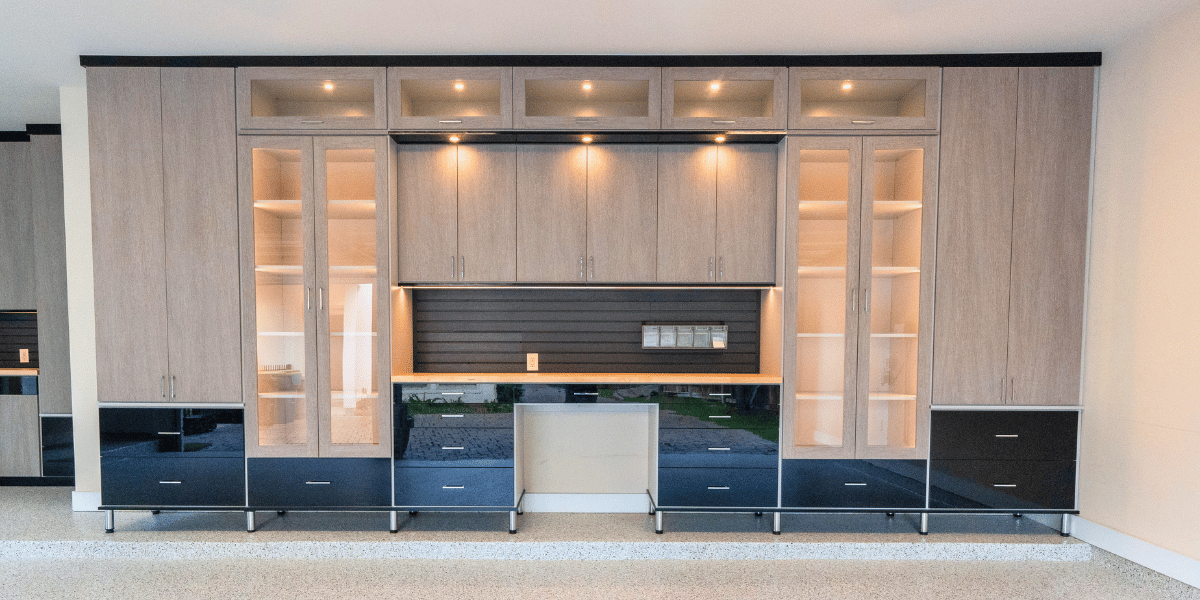
Most garages are asked to do too many things at once: park the car, hold the holiday decorations, store the lawn equipment, and somehow also function...
4 min read
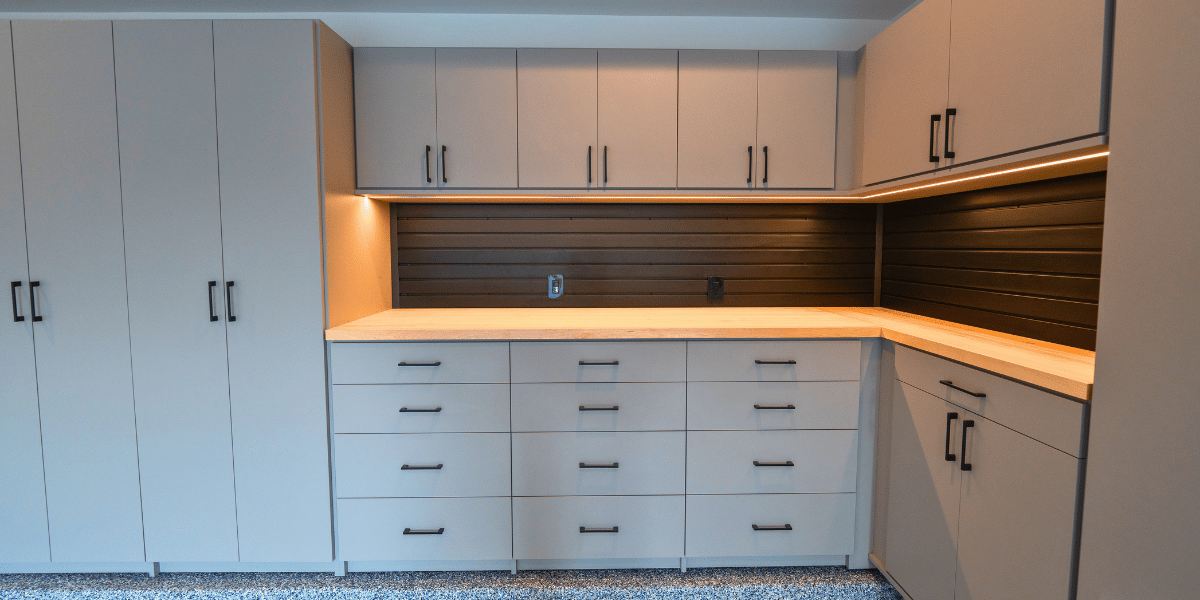
When it comes to shopping for garage storage in Houston, deciding between custom cabinets, slatwall, or open shelving can be tricky, especially given...
5 min read
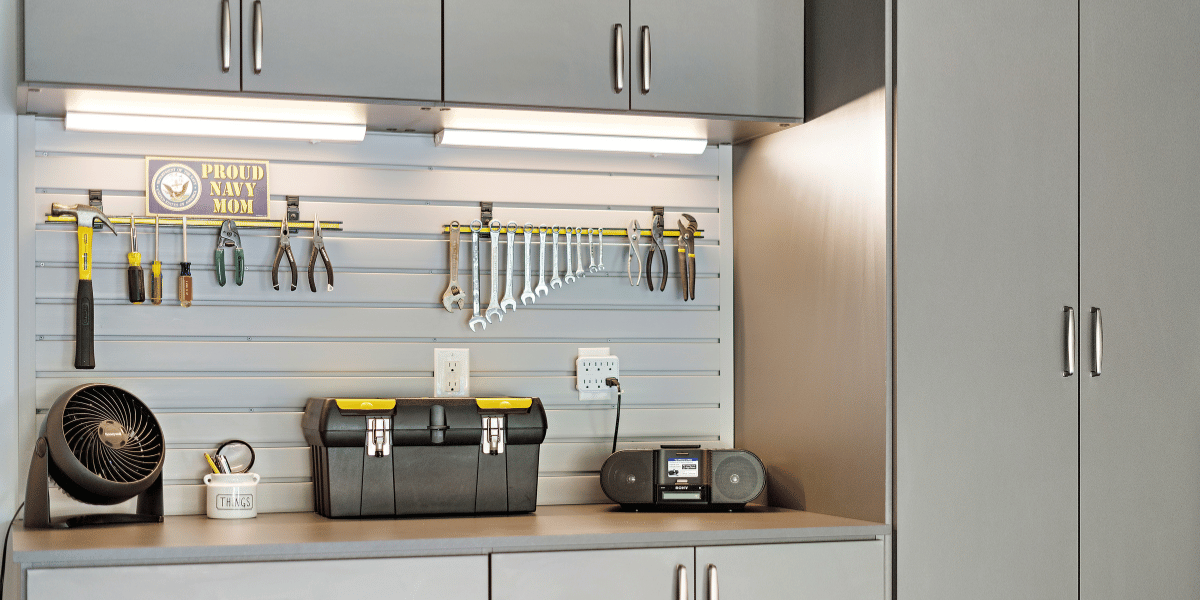
Slatwall is a grooved wall paneling system that converts garage walls into flexible, adjustable storage for hooks, baskets, and shelves. If your...