
6 min read
Best Laundry Room Storage Ideas for Families with Kids
The best laundry room storage ideas for families with kids do three things well: they keep detergent and cleaning products out of children's reach,...
8 min read
The short answer: To maximize storage in a small Houston laundry room, build up instead of out, plan cabinets around how you actually do laundry, and choose moisture-resistant materials that can handle humidity.
If your laundry room is really a hallway closet, a pass-through between the garage and kitchen, or a stacked-unit nook in a townhome, you are not alone. Small laundry spaces are one of the most common frustrations we hear about from homeowners across Greater Houston. The good news is that a few square feet, planned well, can hold far more than most people expect.
After more than 25 years of designing custom spaces, we've seen firsthand how utilizing vertical space and taking real life into account can transform a laundry room. In most small laundry rooms, the biggest gains come from three places: the wall space above your machines, the narrow gaps beside and between them, and the back of the door.
In this article, we'll walk you through how to plan a small laundry room the way a designer would, with Houston-specific advice on humidity, home layouts, and the mistakes that quietly waste space.
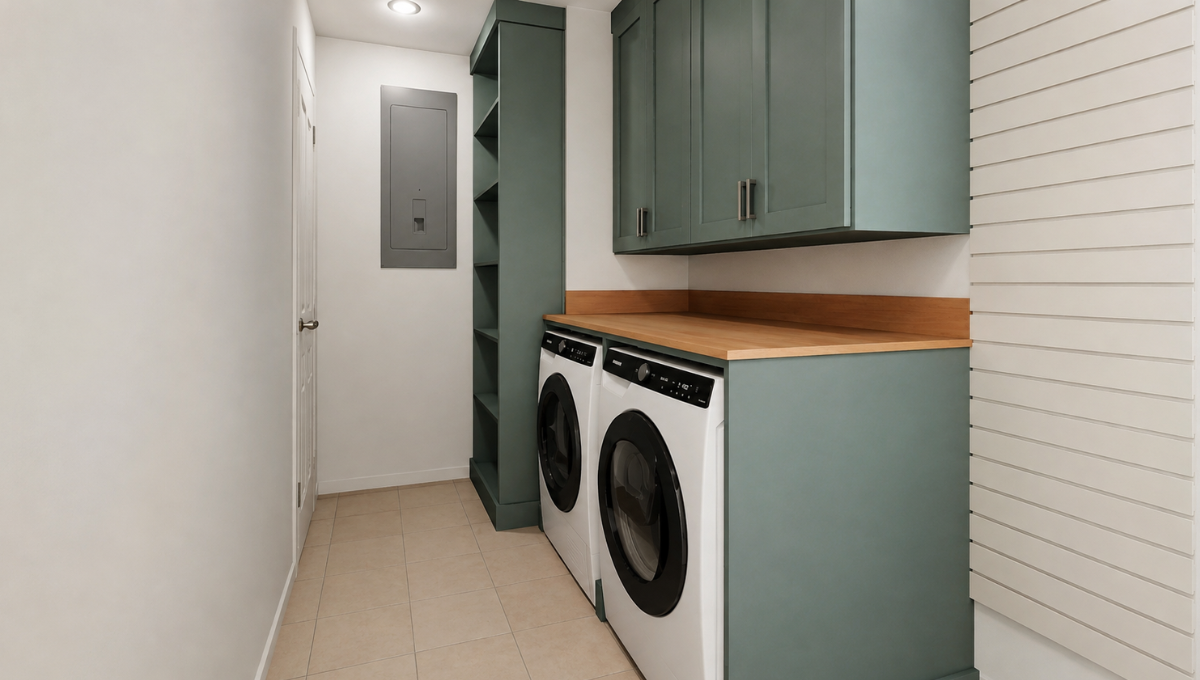
Houston's housing stock produces a few very specific laundry room shapes, and each one has its own storage problem. Knowing which one you have is the first step toward fixing it.
In every case, the room is usually not too small. It is under-planned. Most builder-grade laundry rooms ship with one wire shelf and nothing else, which leaves most of the wall unused. The easiest way to get an accurate estimate for your specific floor plan is to schedule a free in-home design consultation.
The most useful laundry rooms are organized by task, not by product category. Before you buy a single bin, walk through a normal laundry day and note where you stop, set things down, or wish you had a surface. Then give each step a home:
When storage follows this sequence, you stop crossing the room or leaving it to finish a load. In a small space, that flow matters as much as raw cubic footage.

In a small laundry room, the wall above your machines is usually the largest untapped storage area you have. A single wire shelf uses a fraction of it. Full-height wall cabinets that run close to the ceiling can turn that same wall into closed storage for bulk supplies, with the top shelf reserved for items you only need a few times a year.
A few vertical strategies work especially well in tight spaces:
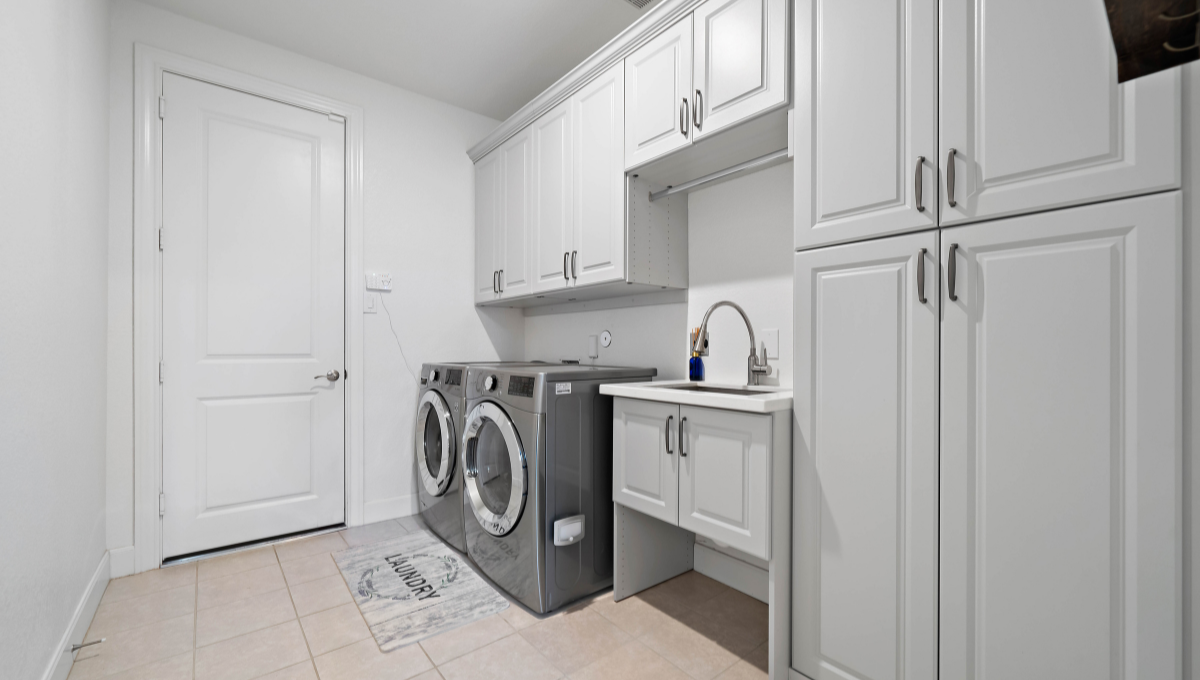
Stacking front-load machines frees up an entire machine-width of floor or wall for a tall cabinet, a hamper pull-out, or a folding surface. It is often the single biggest space gain in a laundry closet or townhome nook. The trade-off is that the dryer controls sit higher, and stacking is only possible with machines designed for it, so check your manufacturer's requirements and stacking kit before planning around it.
If you prefer side-by-side front-loaders, a countertop installed over both machines gives you a folding surface that was not there before. Leave enough clearance for the machines to vibrate and to be pulled out for service, and follow the manufacturer's guidance on dryer venting. Top-loaders cannot take a countertop above them, so in that case the focus shifts to upper cabinets and side storage.
In a small room, every feature has to justify the space it takes. These are the ones that consistently earn their spot:
|
Feature |
What it solves |
Best for |
|---|---|---|
|
Pull-out hamper cabinet |
Hides dirty clothes and pre-sorts loads |
Pass-through rooms that guests walk through |
|
Slim pull-out beside the machines |
Uses the 6 to 10 inch gap that usually collects lint and lost socks |
Side-by-side machines with a gap to a wall |
|
Fold-down ironing board |
Removes a bulky item from the floor |
Laundry closets and townhome nooks |
|
Pull-out or fold-down drying rack |
Gives delicates a place to air dry |
Families who line-dry athletic wear or sweaters |
|
Countertop over front-loaders |
Adds a folding surface with zero floor loss |
Side-by-side front-load machines |
|
Tall utility cabinet |
Stores brooms, mops, and the vacuum upright |
Galley rooms and mudroom combos |
|
Drawers instead of base doors |
Lets you see and reach everything without kneeling |
Rooms with base cabinets beside the machines |
If your laundry room doubles as a mudroom, as it does in many Katy and Cypress floor plans, consider splitting the wall: laundry storage over the machines, and a bench with cubbies and hooks closer to the garage door. Keeping the two zones separate stops shoes and sports gear from creeping into your folding space.
This is the part most national laundry room guides leave out. Houston's humidity, combined with the heat and moisture from a running dryer, can make a small, closed-in laundry room a tough environment for storage. Packing every inch with cabinets without planning for airflow can lead to musty smells, warped shelving, and damp supplies.
A few practical habits and design choices help:
Planning for humidity up front protects both your storage and everything you keep in it, which matters whether you live in a Bellaire bungalow or a new build in Pearland.
Honestly, it depends on your room and how long you plan to stay. Store-bought shelving, wall-mounted racks, and freestanding carts can be a smart choice if your laundry room is a standard shape, your budget is tight, or you expect to move in the next few years. For a simple closet with a single wall, a well-chosen shelf and an over-door organizer may be all you need.
Custom storage tends to make more sense when:
Cost for a custom laundry room depends on its size, the number of cabinets, the materials and finishes, and features like countertops and pull-outs. The most reliable way to understand your options is to get a design based on your actual measurements, rather than relying on a general price range.
Even well-intentioned upgrades can backfire in a tight space. These are the mistakes we see most often:
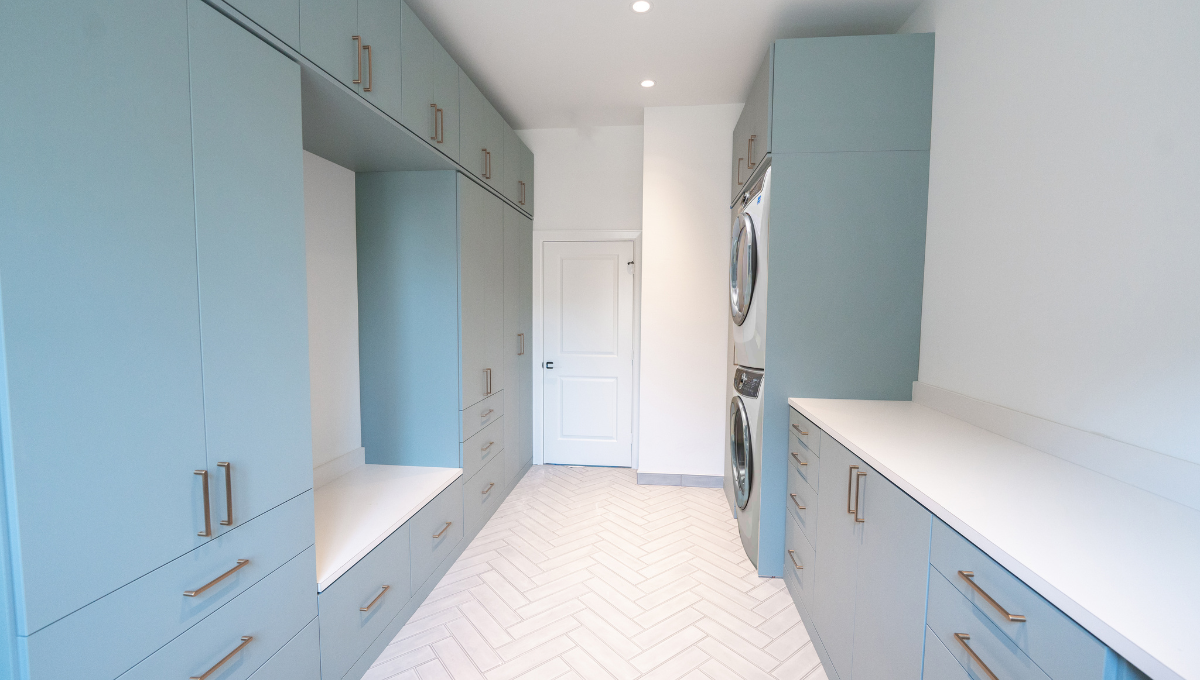
The hardest part of planning a small laundry room is picturing how all the pieces will fit together. That is where a design consultation helps.
Ready to make the most of your laundry room? Schedule your free in-home design consultation. We can help you find storage you didn't know you had, and show you what it would actually look like in your space with a free custom 3D rendering. No commitment or pressure, just honest solutions to optimize your current floor plan.
Upper cabinets above a washer and dryer are often around 12 inches deep, shallower than base cabinets, so they hold supplies without crowding your head while you load the machines. If you have a top-loading washer, leave enough height above it for the lid to open fully. The right depth depends on your ceiling height and machines.
In a small laundry room, running cabinets to the ceiling is usually worth it. It adds a top shelf for bulk detergent and seasonal items, and it removes the dusty gap above the cabinets. Keep everyday supplies on the lower shelves so you are not reaching for a step stool every load.
Start with the wall above the machines, then use side walls inside the closet, where slim shelves or a narrow pull-out can fit. Bifold doors often block side storage, so some homeowners swap them for a pocket door, barn door, or louvered door. Keep the door vented if the closet traps heat and moisture.
Put the hamper where dirty clothes first enter the room, usually closest to the door. A pull-out hamper cabinet with two or three bins lets you sort lights, darks, and towels as you go, and it keeps laundry out of sight in pass-through rooms that guests walk through.
Yes, and many Houston production homes are designed that way. The key is splitting the wall into zones: laundry storage above and beside the machines, and a bench, cubbies, and hooks near the garage door. Separate zones keep shoes, backpacks, and sports gear out of your folding space.
Avoid keeping paper goods, spare linens, and cardboard boxes on the floor or in low cabinets, where humidity can reach them. Keep flammable items, like aerosols and solvents, away from the dryer. If you have young children, store detergent pods and cleaning chemicals up high or behind a locking cabinet door.
Yes. Many new homes in Katy, Cypress, and other Houston suburbs come with a single wire shelf in the laundry room, which leaves most of the wall unused. A designer can measure the finished room and your machines, then plan cabinets, counters, and pull-outs that fit the space you actually have.
6 min read
The best laundry room storage ideas for families with kids do three things well: they keep detergent and cleaning products out of children's reach,...
6 min read
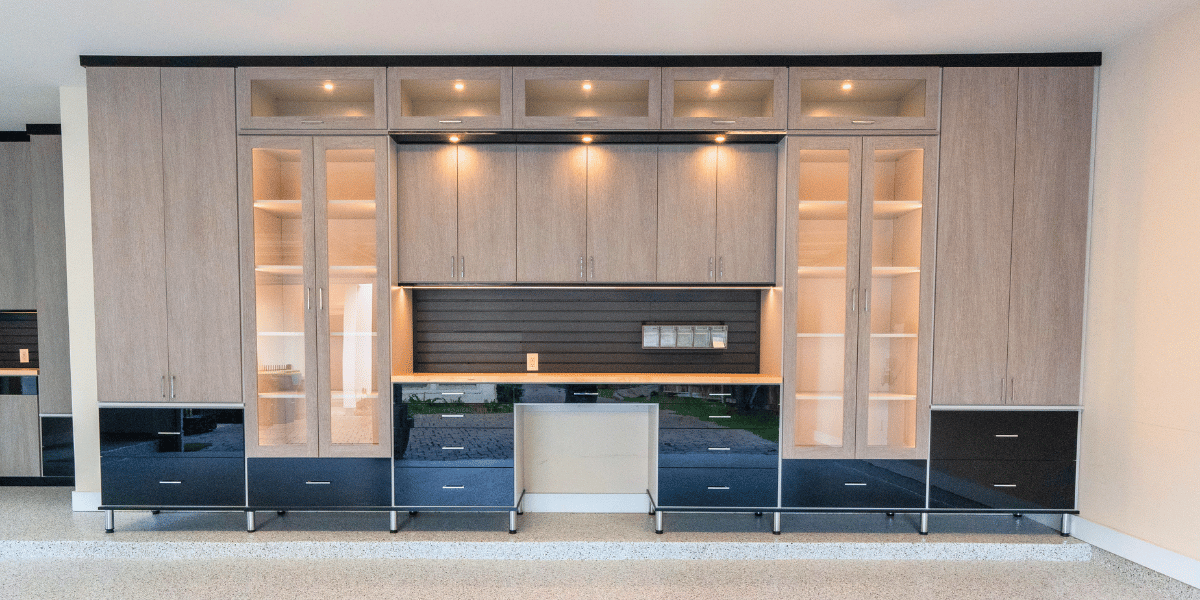
Most garages are asked to do too many things at once: park the car, hold the holiday decorations, store the lawn equipment, and somehow also function...
5 min read
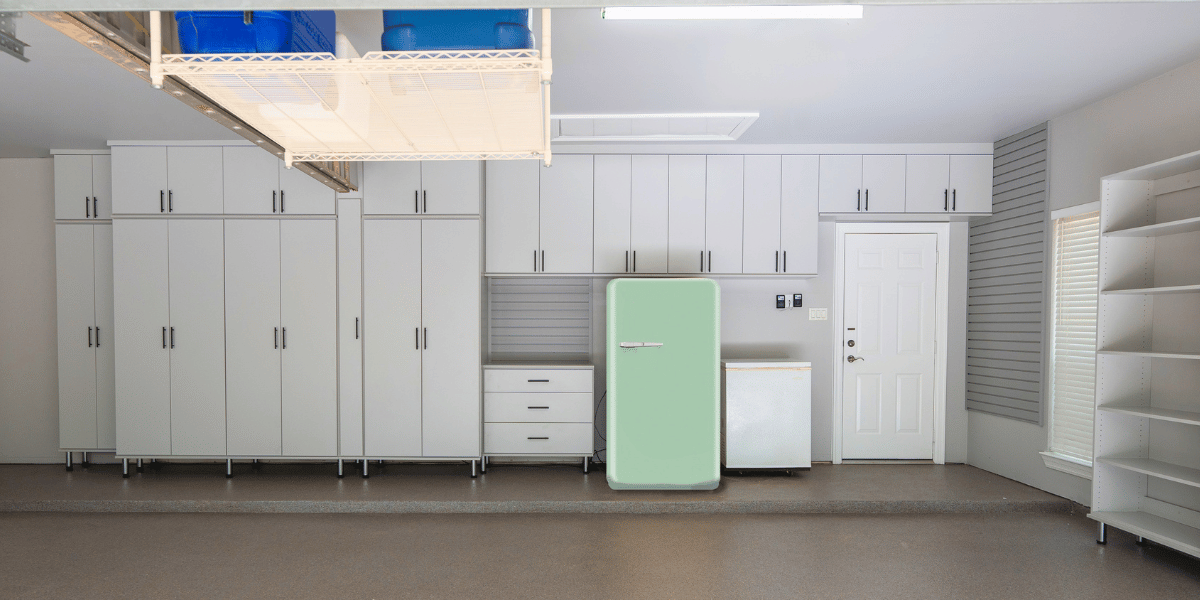
Quick Answer: The best way to maximize garage storage when you have limited wall space is to build upward instead of outward, design around your...